
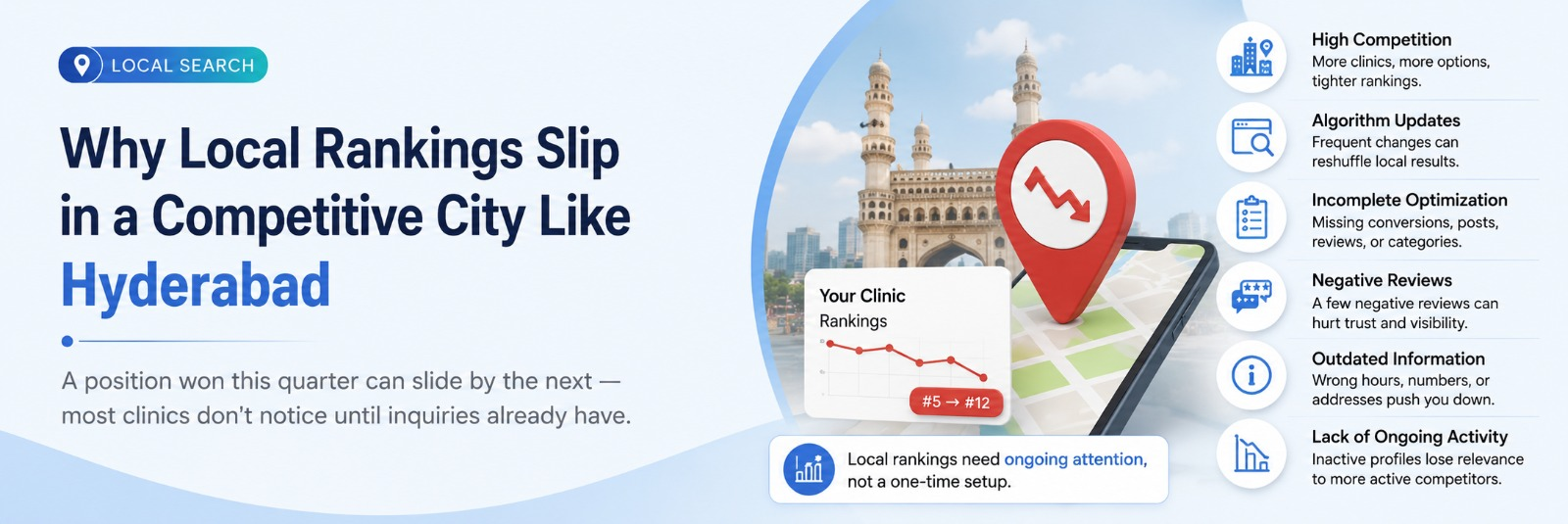
A position won this quarter can quietly slide by the next one, and most clinics don't notice until inquiries have already dropped. Here's why that happens in a market like Hyderabad specifically, and what actually holds a ranking in place.
Competitive density punishes complacency faster
In a city with a high concentration of hospitals and specialty clinics, the gap between the top three Map Pack positions and everyone else is enormous — research shows listings inside the local pack capture dramatically more calls, clicks, and direction requests than those just outside it. In a low-competition market, a decent profile can coast for a year. In a dense one, a competitor's single review push or profile refresh can be enough to displace you within weeks.
Rankings are relative, not absolute
A ranking isn't really a score you earn and keep — it's a comparison against every other listing serving that query, updated continuously. Your profile doesn't have to get worse for your ranking to slip. Everyone else just has to get better, and in a competitive category, someone usually is.
Review velocity matters more than review count
A clinic with 200 reviews collected steadily over two years often loses out to a newer competitor generating 15 fresh reviews a month right now. Recency and pace signal current relevance in a way a large but stagnant review history doesn't.
Profile neglect is the single biggest self-inflicted cause
Outdated hours, stale photos, an unanswered Q&A section, an unmonitored review stream — none of these cause a dramatic overnight drop. They cause a slow, easy-to-miss decline that only becomes obvious once inquiry volume has already fallen.
What actually holds a position in place
- Monitoring rankings on a schedule, not just noticing when a client calls to ask what happened.
- A standing review-generation system, not a one-time campaign.
- Regular profile updates — photos, posts, services — treated as ongoing maintenance, not a launch task.
- Competitor awareness: knowing who's actually contesting your position, not just your own metrics in isolation.
Winning a ranking and defending one are genuinely different skills. Most agencies are set up to do the first. Fewer are set up to keep doing the second, month after month, without being asked.